Traveling Beyond the Postcard
Sometimes getting lost is the very best thing...
01 Apr 2016
Kia Ora, a Māori greeting used for hello, good bye and thank you. Lynnette and I have been planning this trip for over a year. Originally scheduled to go this same time last year, our trip had to be put on hold. I am so excited to finally be starting this adventure!
We arrived safe and sound to cloudy skies in Auckland. We got through customs quite easily. The lovely gentleman did have a comment or two about the current political circus in the USA and I am sure we will here more about it before we come home! I think we should travel incognito as Canadians, Eh?
After having some coffee and a bit of freshening up we headed out. Lynnette driving, (she is an excellent driver) and I navigating. The drive from Auckland to Waitomo takes about 3 hours – normally! It took us a bit longer due to directional challenges. In our defense, in addition to being completely jet lagged, the roads here are not marked so it can be difficult to know if you are on the right track or not. We ended up in a town called Hamilton – not too far off the proper track. We stopped in a cafe and had a bit of lunch and asked directions. It was a very nice lunch and the staff super nice and helpful. We knew we had some trouble with their directions and after driving for 20 minutes or so we also knew we were not where we should be and needed help again. We pulled into a station to get directions. Me: “We’re a bit lost, is this Whatawhata?” Nice young man; “No, this is Hamilton” Me: “Again?!!! We were able to follow his instructions with no problems and arrived about 1:30 pm.
Our first night was spent in Waitomo at the Waitomo Caves Hotel. It’s a lovely old hotel, built in 1908 and expanded in 1928. We were told that Queen Elizabeth stayed there in the 1950’s. The staff, that did everything from checking us in to serving our dinner, was a young french couple, Tony and Leah. They were delightful and took good care of us. Our room had a large balcony that overlooked the grounds and also the awning of the front entrance. We had a nice dinner of fish we’d never heard of and were fairly early to bed.
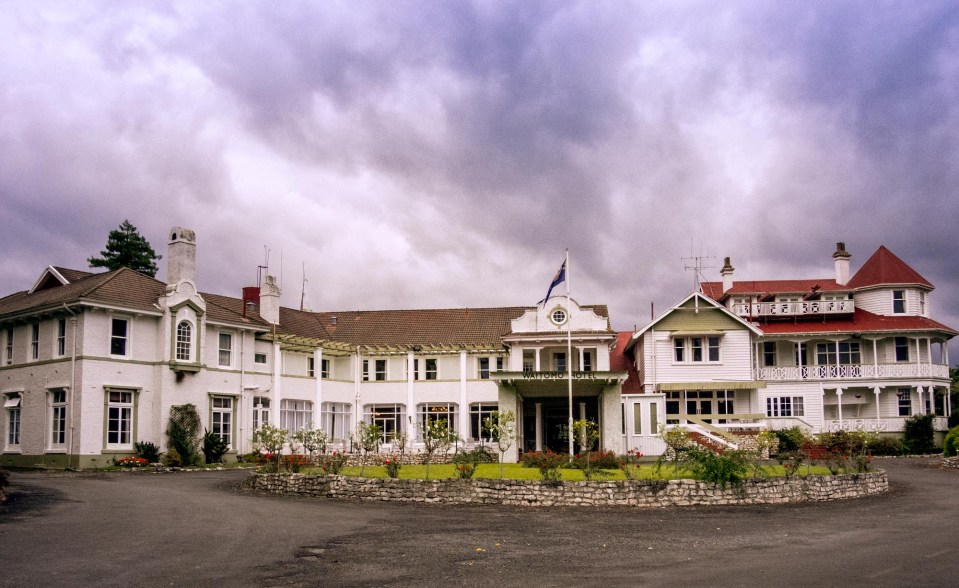
Waitomo Caves Hotel
The next morning we awoke to rain. We had breakfast at the general store in the village, and bought tickets for the 11:30 am Glow Worm Cave tour.
The Glow Worm Cave tour was awesome! The glow worms are the larvae of a variety of fungus gnat (Arachnocampa luminosa) that is carnivorous. They like dark damp places and accumulate on the roof of the caves. To feed the larvae send down a sticky filament to catch flies. They glow to attract the flies as they think it is a way out of the cave. The hungrier they are the brighter they glow. Ironically, once hatched into flies they are at risk of being eaten by other larvae! The flies look similar to a mosquito.
The tour takes you on a boat through the cave. It is completely dark except for the lights of the the worms on the ceiling. Sometimes the light looks green and sometimes it looks blue white. It’s like looking into a dark sky filled with stars or fairies ….. it was truly magical! I wish it had been longer.
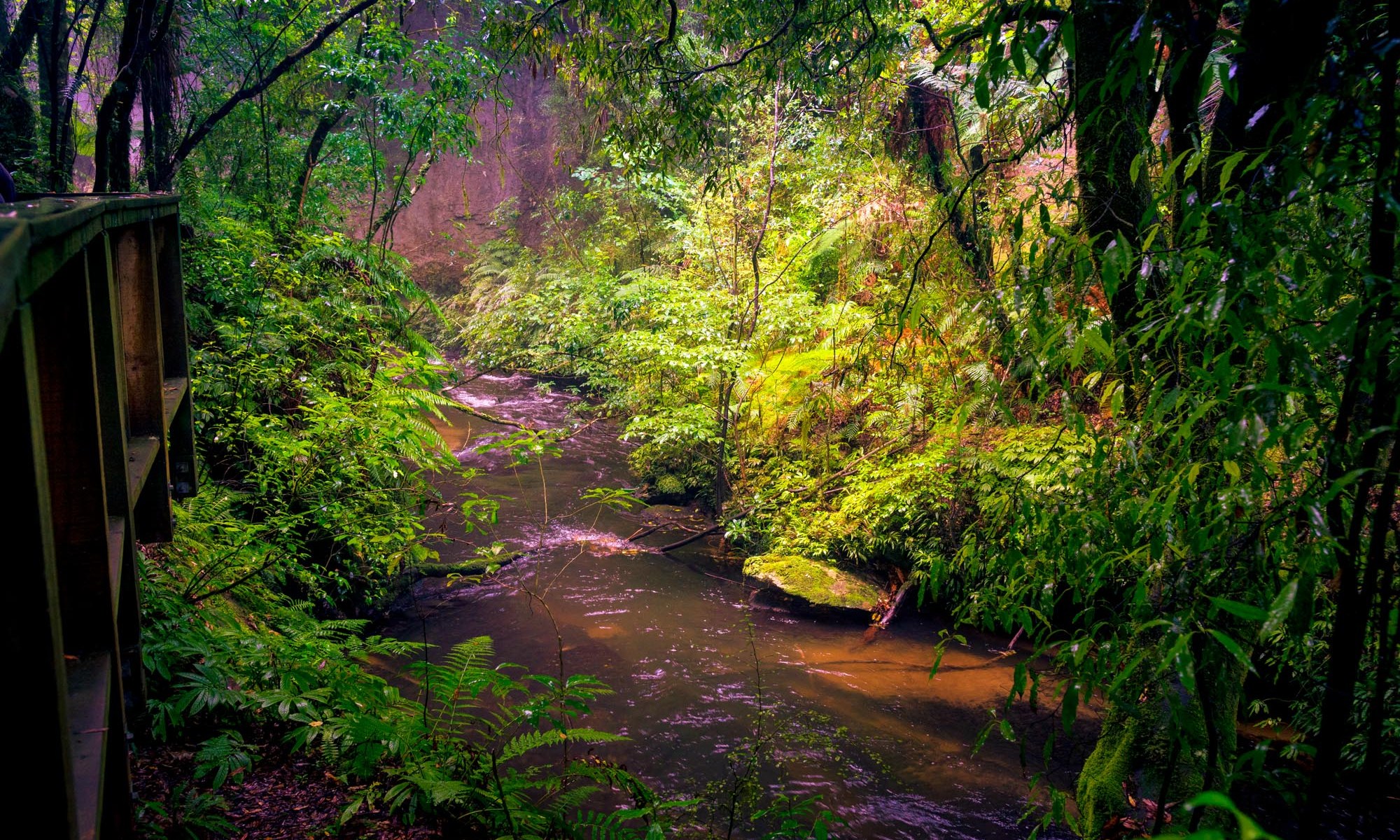
After the tour we drove to the Mangapohue Natural Bridge. The bridge consists of two rock arches formed by the Mangapohue Stream in the Marokopa River valley near Waitomo. The 17m high limestone arches are a remnant of an ancient cave system. It’s an easy 10 minute walk to the bridge from a small car park. Once you enter the remnants of the cave it feels like you are in an Indiana Jones movie. Tall rock faces surround you with moss and fern growth; tall trees block the light that breaks through the treetops in rays illuminating the water droplets on the plants turning them into jewels.
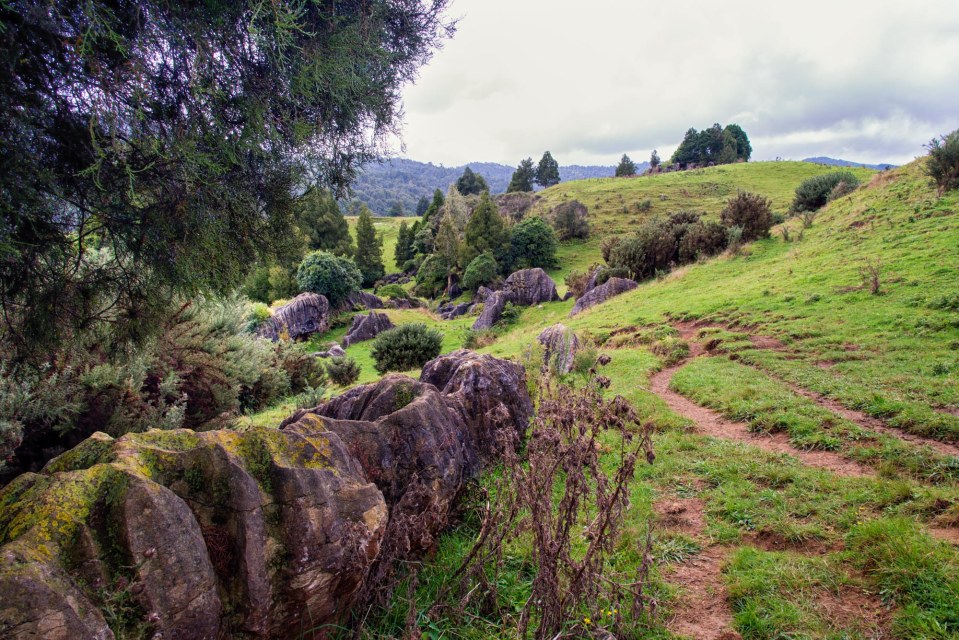
On the other side of the bridge is beautiful pasture land with large rock outcroppings (and a fair amount of cow patties too). We heard, and later saw, a herder and his dog moving a large group of cattle. In this area there is a large fossilized mollusk. I spent some time looking for it but did not find it among the other rocks. It had been raining and the clay trail was very slippery. I am still sad for abandoning the search but we had to get on the road in order to get to Rotorua before dark.
The drive between Mangapohue and Rotorua was lovely. We passed this fence decorated in boots. Lynnette read somewhere that the shoes are old trampers shoes, left by hikers who have used the trails in this area.
The picture below that looks like spider web was all over the plants in the area approaching Mangapohue. We’re going to try to find out what it is; we really hope it’s not spider related!!!
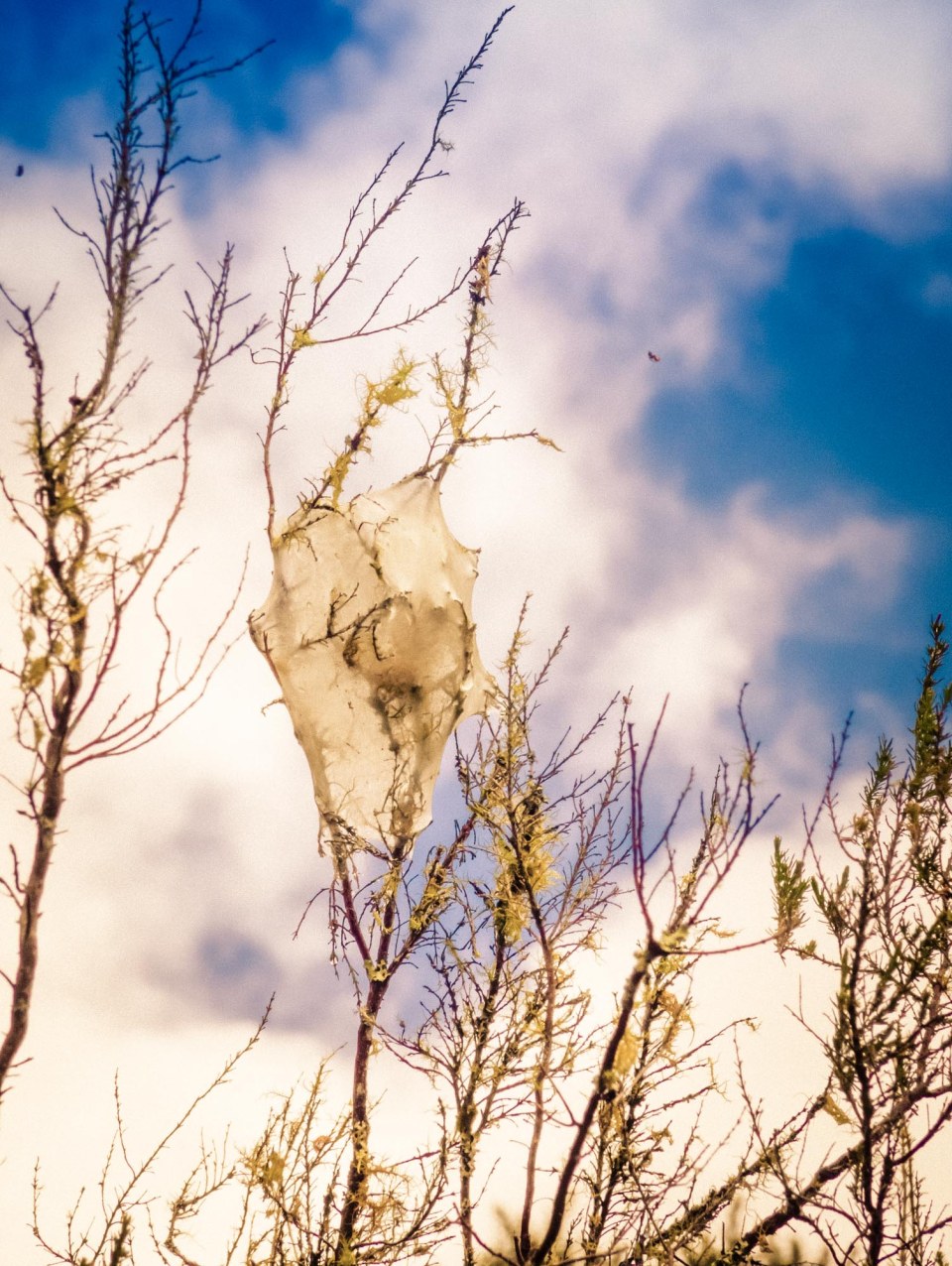
As it turns out this is indeed a spider web. I wish I had something in the picture for scale. It was huge and it freaks me completely out that this is from a spider because the spider must be enormous!

10 Oct 2015
Our last day with the tour. We left Hali Country Hotel and I am sad that I never made it through their little museum to honor author Þórbergur Þórðarso. We packed up and had a quick breakfast before the drive back to Reykjavik. I took a few quick shots of our temporary home.
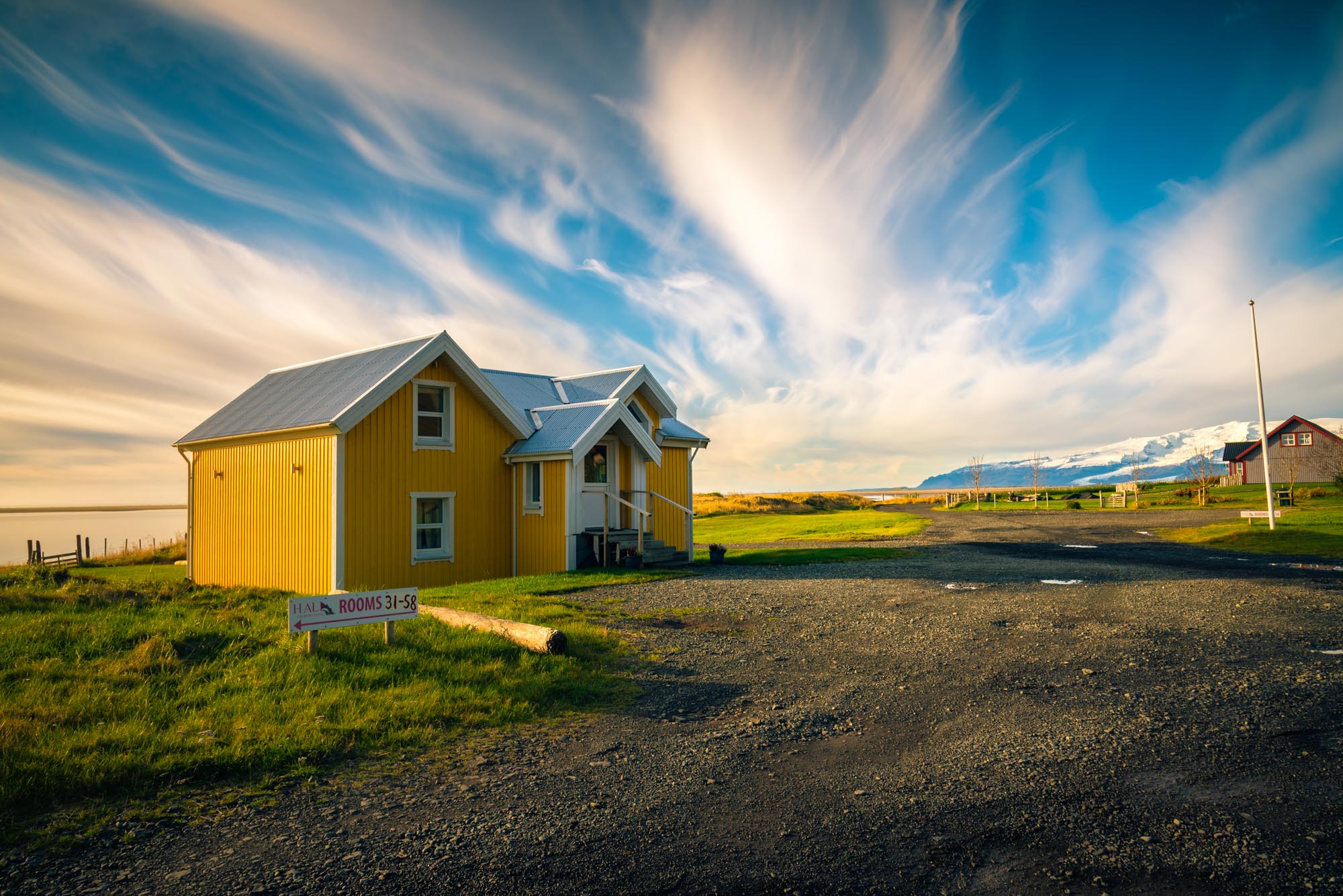
The little yellow cottage was home to our tour leaders and where we met for Lightroom discussions.
Our rooms were in the building on the left side if the cover photo. They were very comfortable. There were historical photos throughout the building; pictures of the people and the farm that gave a real sense of life as it was here several generations ago.
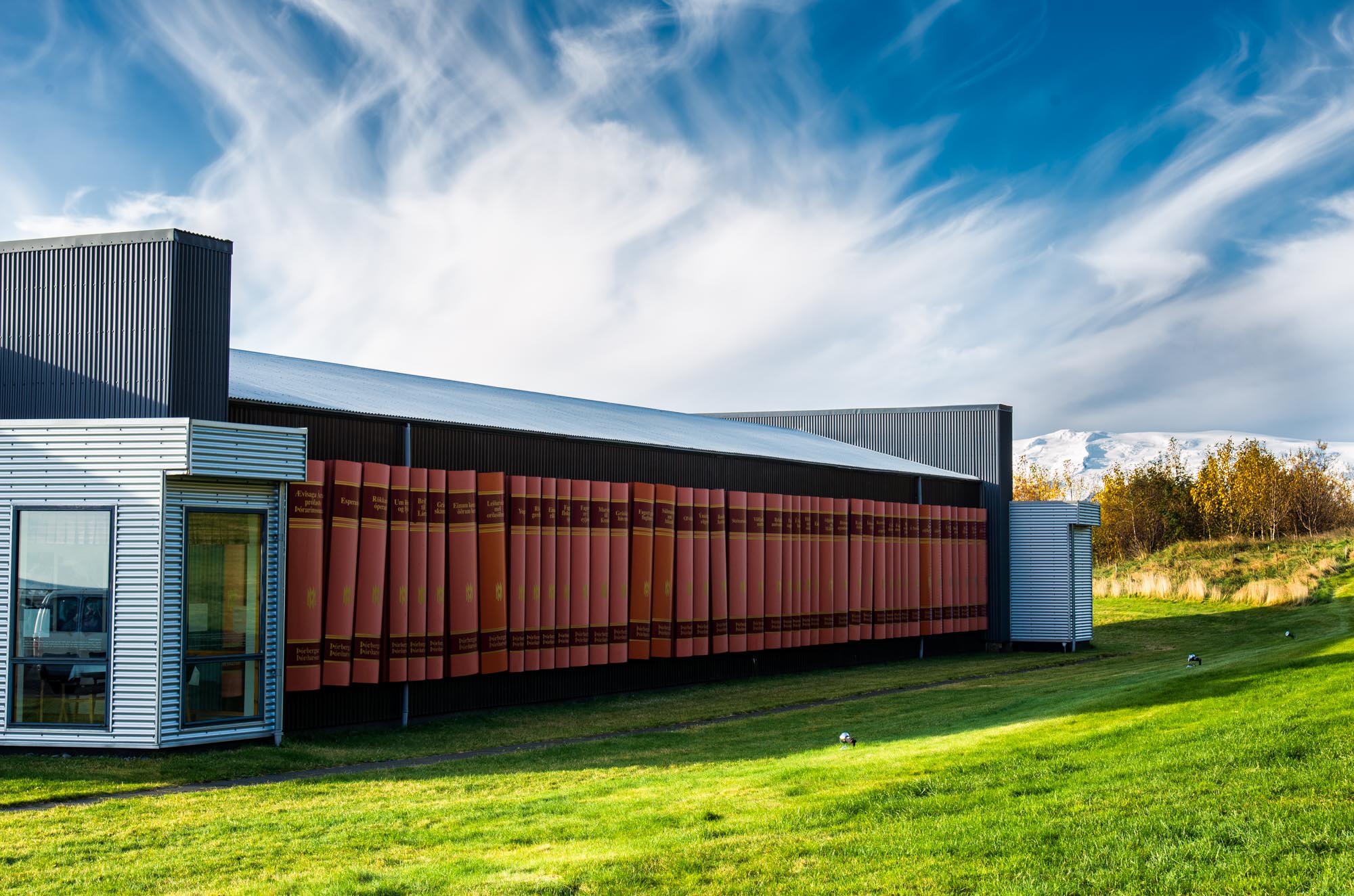
This is the restaurant and museum. I love the facade that looks like a book shelf. The large dining room had lovely photographs taken in the Skatafell National Park. The owners of this farm and hotel were lovely people.
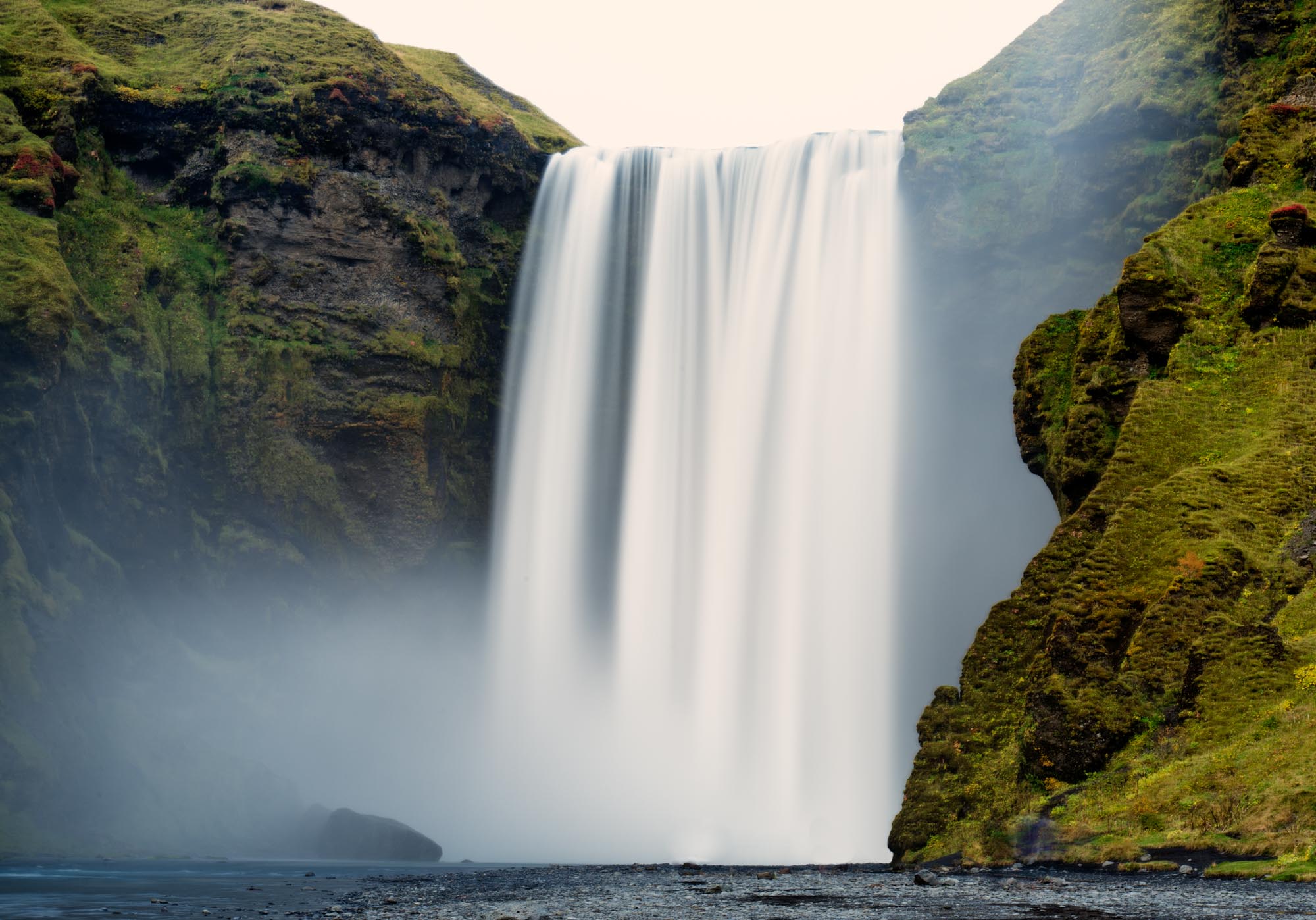
We made several stops to photograph the scenery on the road back to Reykjavik.
Robin and I spent one more day exploring Reykjavik before the long journey home.
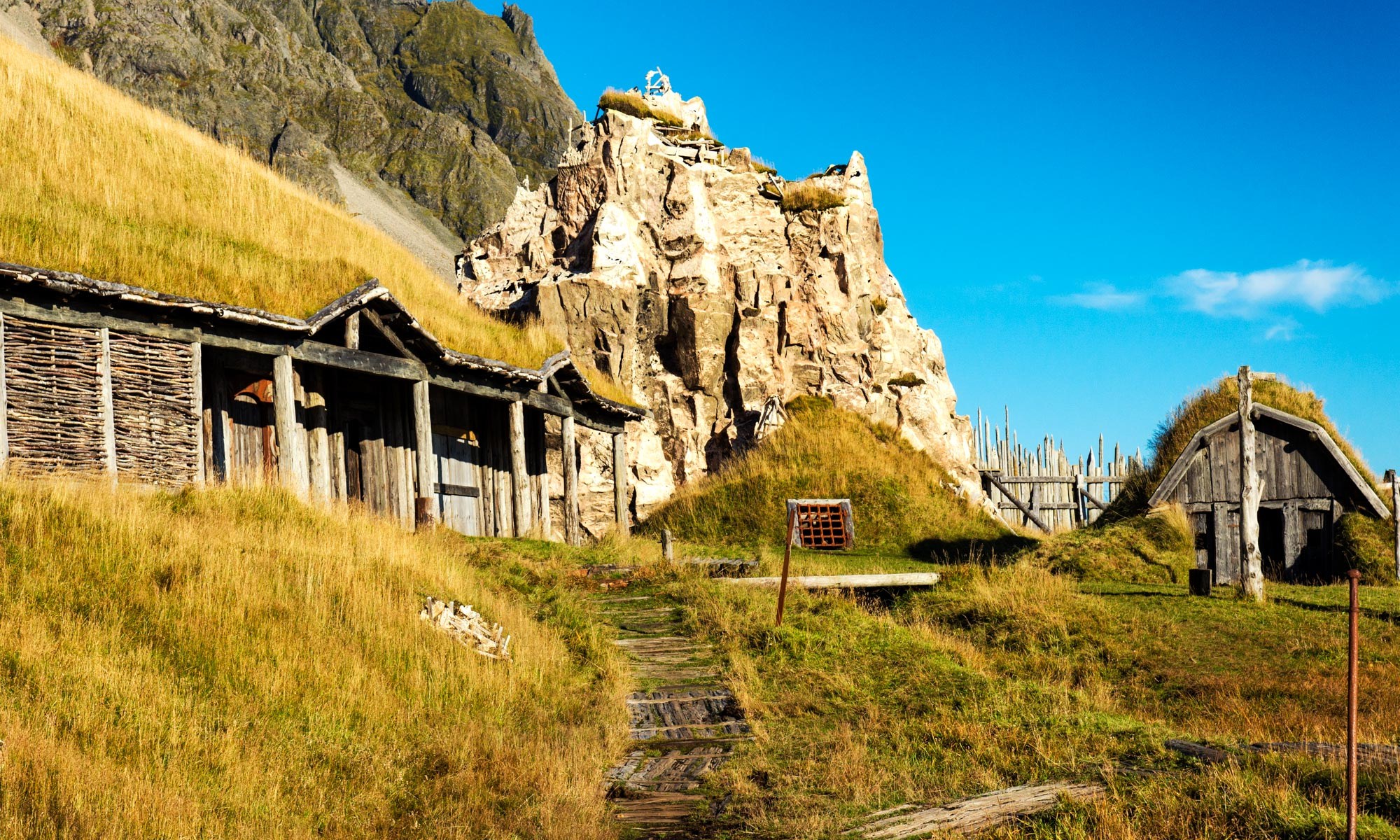
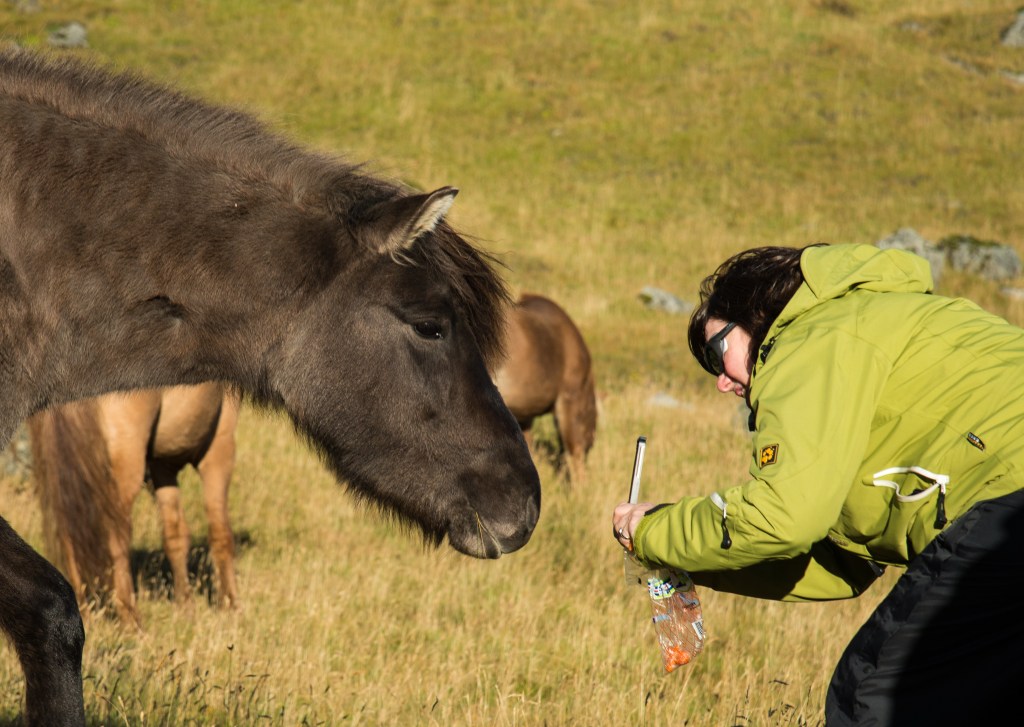
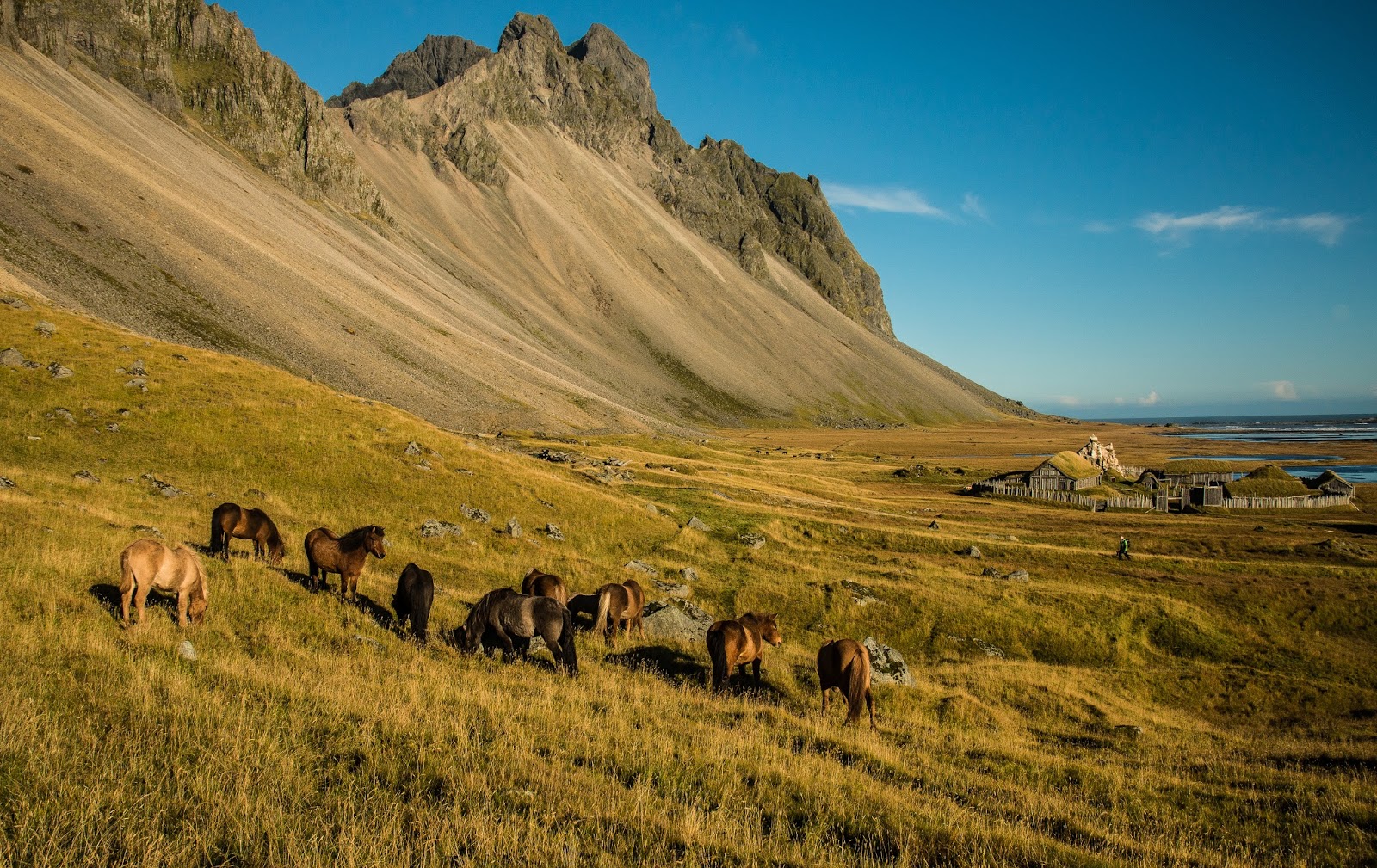
We were promised horses at this next location – I could hardly wait! We had bags of carrots as friendship offerings! As you drive the main road between Hofn and Djupivogur, which is in the middle of nowhere, there is a gravel road that twists away from that main route. Then signs for “Viking Coffee” start to appear, it must be a joke I’m thinking. Eventually we come to a gravel parking area and a little building – Viking Coffee! The sign says you must pay for parking at the coffee shop. A short walk reveals a valley with what looks like a Viking village in a beautiful landscape and a large herd of Icelandic horses!
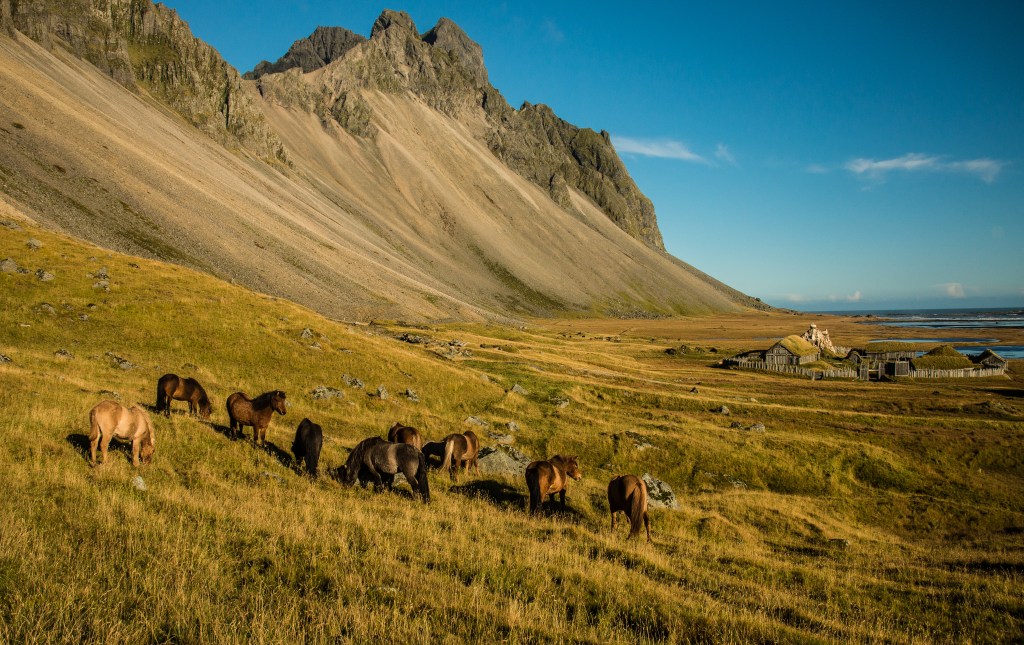
These horses are the descendants of the horses brought over by the Vikings over eleven centuries ago. It is thought that there was a separate species of horse found in the Scandinavian areas that were later crossed with European breeds, except in Iceland where it has remained pure. The horses are short in stature and sturdy looking.
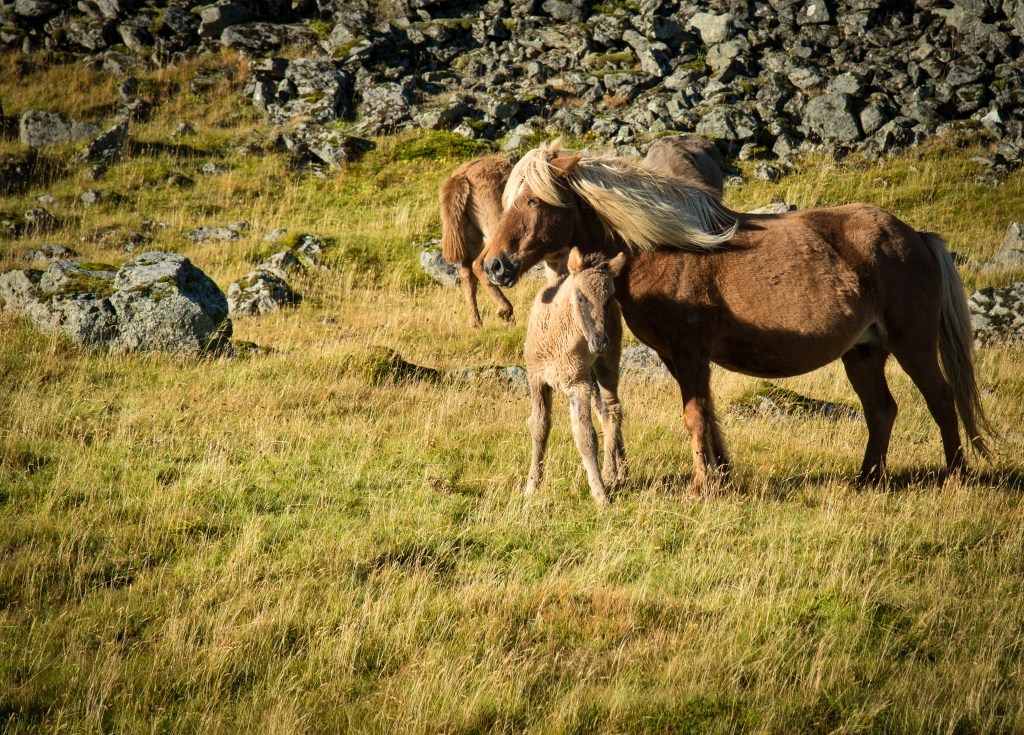
The Icelandic horse has a “running walk” gait similar to that of the Paso Fino and the Tennessee Walker. Some are also bred for a “flying pace” which is very fast, some can run almost 30 miles per for short distance racing. When you see them at this “running walk” they are beautiful to watch, very smooth.
The people of Iceland seem very proud of these lovely horses which is why it is so hard to understand why they raise them for meat. We did see it offered on one menu but apparently most of the meat is exported to Japan.
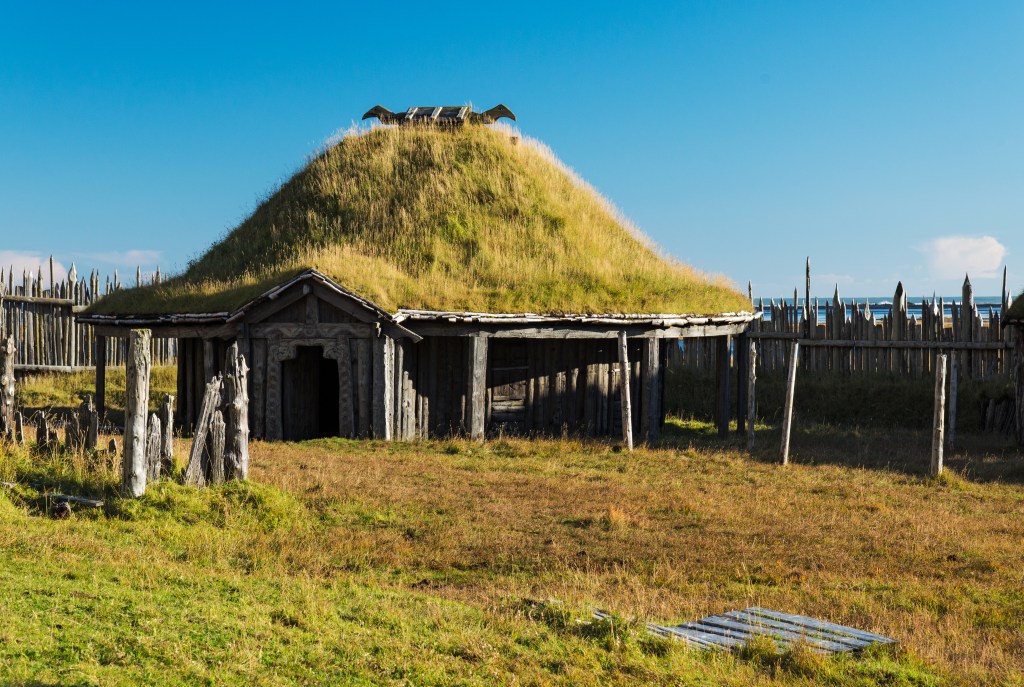
The Viking Village that we saw was built in 2010 as a movie set for an Icelandic film that was never made. It does feel like the real thing and is very fun to wander around in; I wish we’d had more time here. Apparently Universal is supposed to film something here…..?
As we made our way back toward the coffee shop a few of us took an alternate route and found ourselves looking at a large pool of water or seasonal lake of unknown depth.

It was a mud flat! Although there were a few places where it was deep enough to get our shoes good and wet!

A cappuccino at the coffee stand was surprisingly well done.
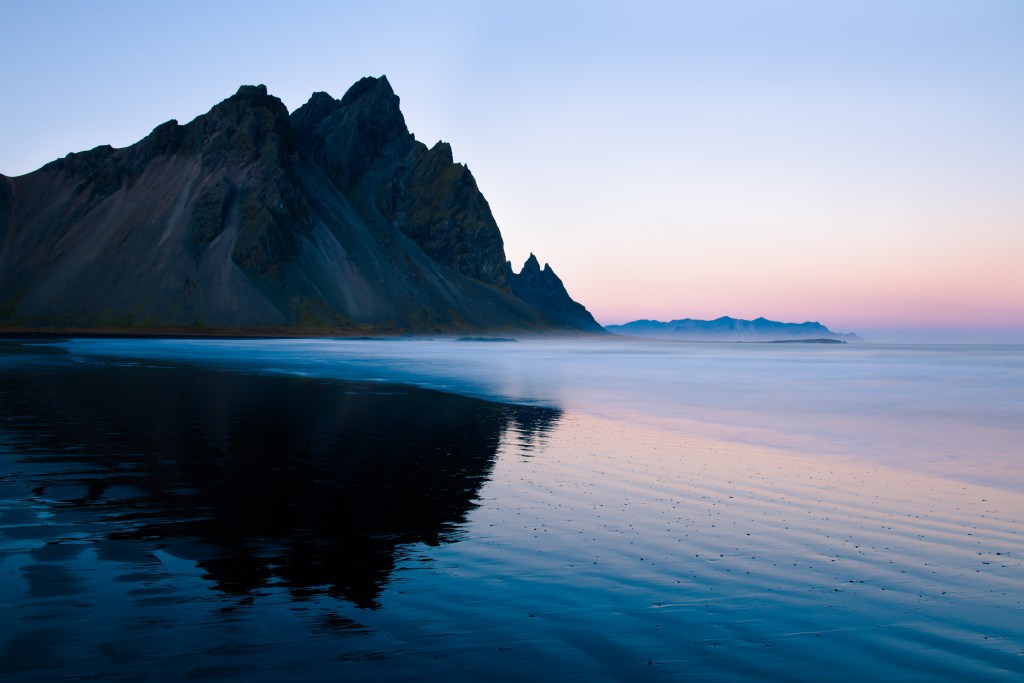
One final stop on our way back to the hotel was made at a beach where we hoped to get a nice sunset and reflections on the sand.
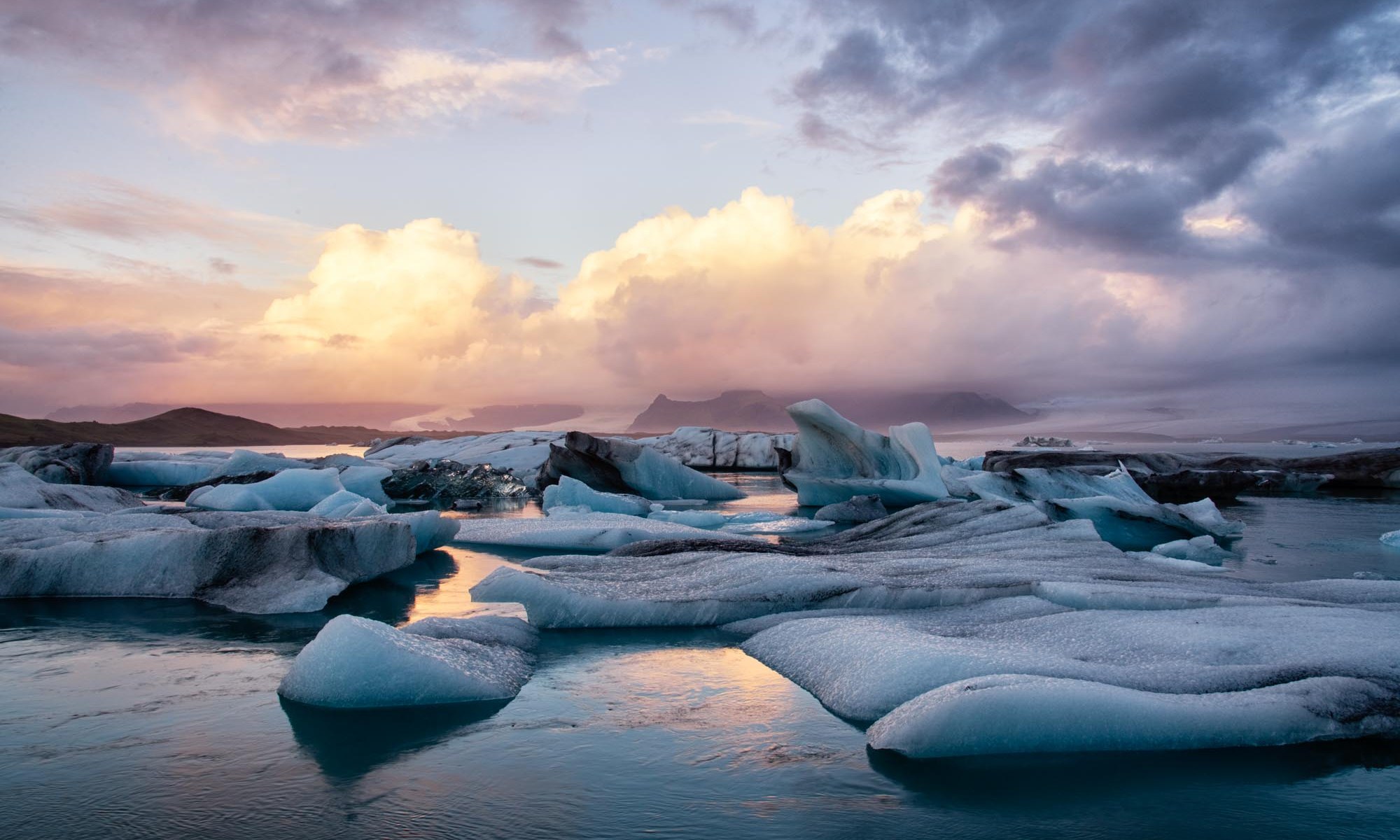
6 Oct 2015
This morning we make our way to Hali Country Hotel located 7.5 miles east of Jökulsárlón-Glacier lagoon. This will be our home for the next four nights.

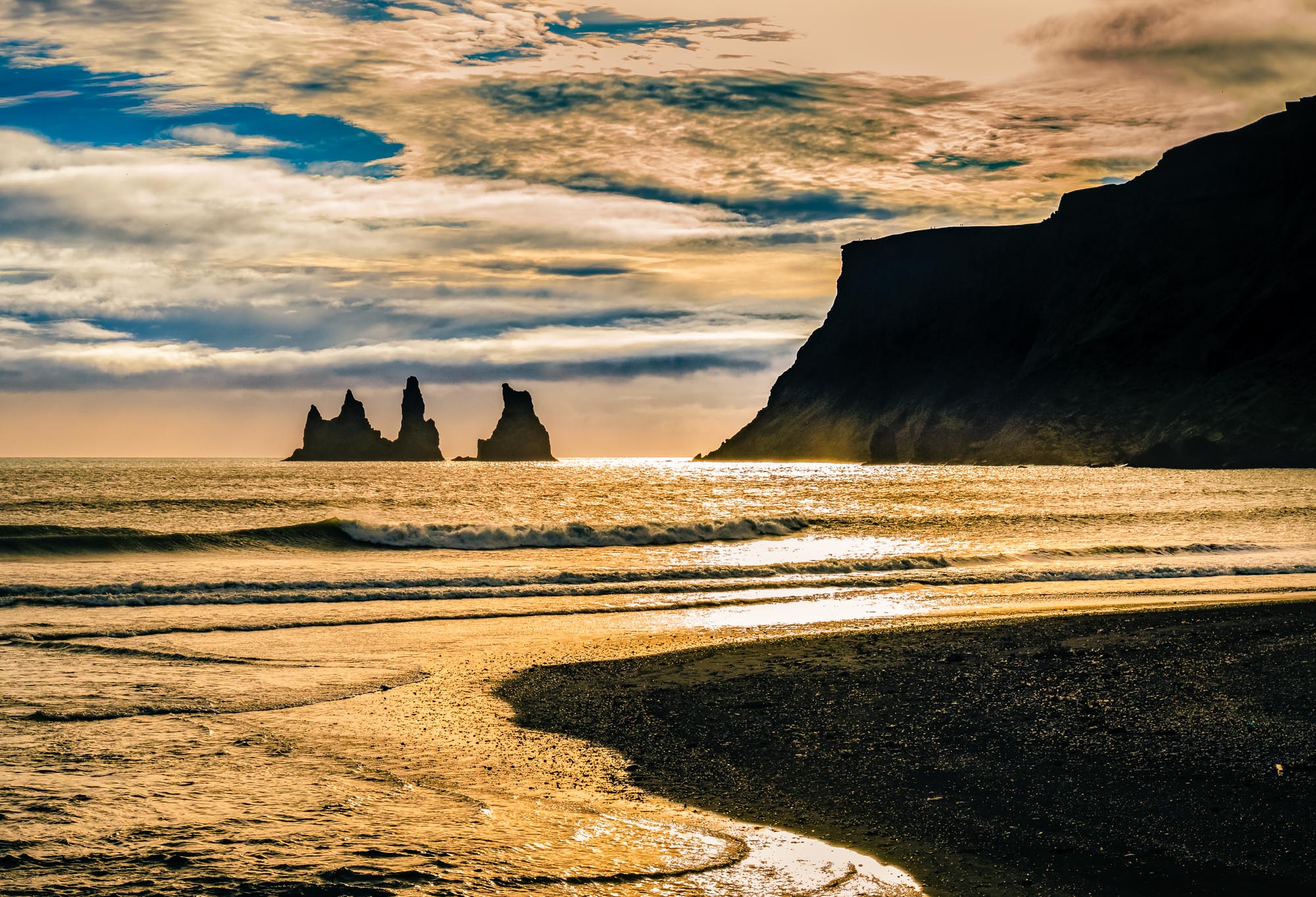
Our first stop after leaving Reykjavik was Reynisfjara beach near Vík. There are basalt columns, black sand and two sea stacks. The weather was overcast and there were many people on the beach so it wasn’t the most promising for photographs. It was very lovely to see. I made an attempt at an HDR photo at this location (sandwiching multiple shots with different exposures to compensate for the range in correct exposure). It isn’t great I think because the waves and clouds were moving but it gives you an idea of what the beach looked like.
Along the way we passed through an area of obvious volcanic activity covered in thick moss stretching for miles and miles. It looked like big soft pillows of green mossy wonderland; I wondered where all of the faeries were hiding! It was so beautiful and foreign and completely captivating! This area is called the Eldhraun lava field. It was created by the 1783 Lakagíga volcanic eruption which wasn’t a single event, but rather 8 months’ worth of lava flows and explosions. The Laki explosion not only killed 50% of the livestock and 25% of the population in Iceland, it also had a dramatic impact on the rest of Europe. Global temperatures dropped as a result of the sulfur dioxide spewed into the Norther Hemisphere causing drought and crop failure. It is estimated to have killed over six million people globally! Over the centuries the lava flow has been covered over with moss and some of the native plants creating this other-worldly landscape.
Closer to Skatafell National Park we stopped at Gigjukvisl Bridge where a piece of the old bridge is on display. In 1996 a large glacier run was caused by the eruption of the Grimsvötn volcano on Vatnajökull (kull is Icelandic for glacier). The bridge was destroyed by floating ice boulders as big as a house!

Robin standing beneath the twisted remains of the original bridge.
Wednesday October 7
We got up for a sunrise shoot at the black sand beach that the Jökulsárlón-Glacier lagoon feeds into. The Atlantic Ocean in this area is truly vicious, a force to be respected. I have never in my life see such tumultuous surf. It is awe inspiring and a bit scary. There wasn’t much ice there this morning so we went back out to the lagoon and took pictures there. The weather was still overcast with intermittent rain.
Rain made us run for cover and then rewarded us with a lovely rainbow! We saw a young man out here this morning, I assume a local, making a statement to the tourists in three-quarter length pants and a bright red short sleeved tee-shirt! I had on thermal underwear, a wool sweater, a down jacket, a rain coat, a hat that covered my ears and gloves…..I was NOT too warm.
From there we drove out to a location on Vatnajökull glacier. We could see people out on the glacier going in and out of a hole in the ice….crazy if you ask me! A few times we heard sounds…..”glacier noises” that would have sent me fleeing but did not affect their behavior at all!
We ended our day back at Jökulsárlón Glacier Lagoon to photograph the aurora. The solar flare activity was high but the sky was overcast. It was bitter cold when we got there about 10:30 pm. After a time there was a break in the clouds and we were able to see the dancing lights. It wasn’t magnificent but as the evening wore on we did get some pretty good shots. We finally packed it in about 2:00 am completely frozen and exhausted! It was a lifelong dream of mine to see the lights so I felt very exhilarated to have witnessed it!
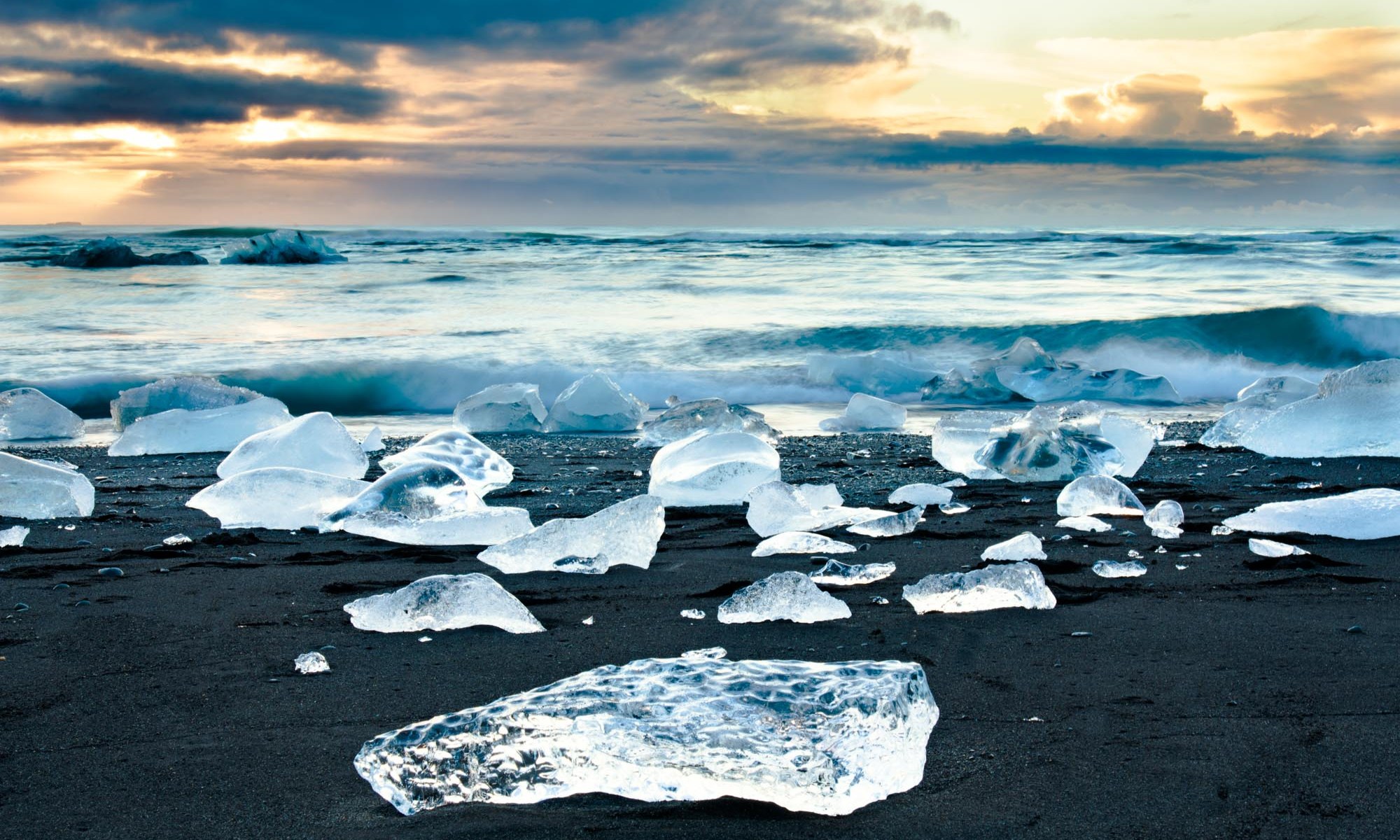
11 Oct 2105
This week has flown by and we are back in Reykjavik! The pace has been non-stop with no time left to blog or look at, much less process, our photographs! I am going to try to catch up now.
Our room is in the north 40, we refer to it as being in the annex. You go up to the 3rd floor of the main part of the hotel, down a hall, turn right into a windowed but dark tunnel across an alley into another building, then down one flight of stairs, turn right and we are at the end of a foyer. It is apparently next door to a club because after dark there is dancing music that goes until about 3 or 4 am. Thank goodness for ear plugs!
Last night we had a late dinner (as usual!) at Geysir Bistro around the corner from the hotel. It was a very nice meal with loads of good wishes and camaraderie. It was such a nice group of people, I feel very lucky to have shared this Iceland visit with them. Lainie, bought us all a glass of champagne to enhance the party spirit. Emails, were exchanged, hugs passed around and a few of us headed back to the hotel about midnight, while the more energetic in the group went round the corner to hear some live music and have a few more drinks.
Robin and I spent today exploring and Reykjavik and revisiting some of our favorite spots. We went back to Harpa and the cathedral, had another Cappuccino and tea at the Laundromat followed by dinner at a Pakistani restaurant. We are mostly packed and ready to go tomorrow.
In the morning our journey home begins. We have had a wonderful time!
5 Oct 2015
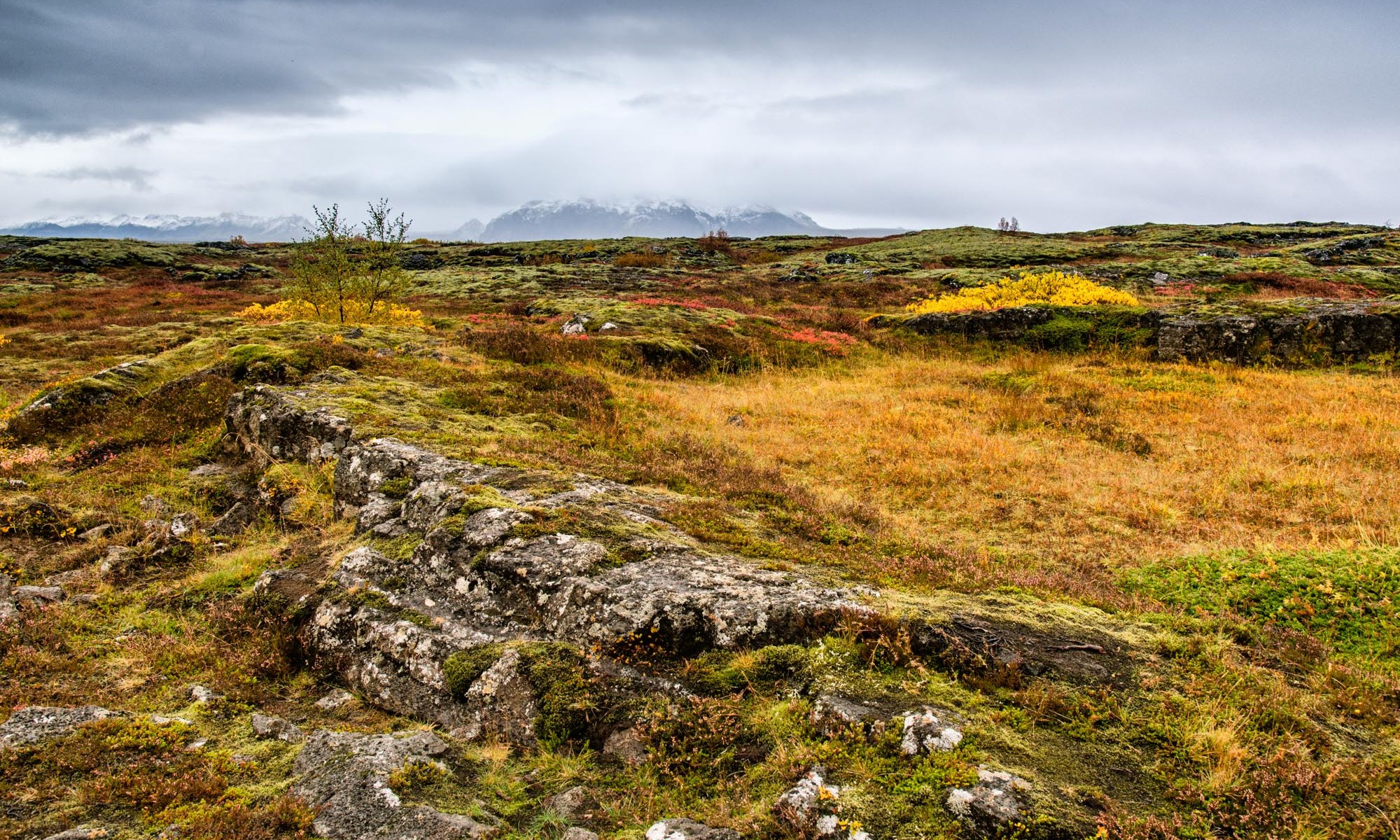
We were delighted to hear that on our way to Vik, the photo tour was stopping at Þingvellir (Thingvellir) National Park and we would have a second chance at some photographs of the area. The weather forecast was poor; still raining, but intermittently, and no wind. Niall, our photo guide, is quite knowledgeable about the local flora and fauna and was able to identify some of the plants for us. The lovely red brush that we saw yesterday is dwarf birch and the yellow is willow. Also are mosses, sedge, and alpine bearberry. When Norse people first settled Iceland toward the end of the 9th century it was heavily forested with dwarf birch and willow. Only a quarter of the island now has native plant coverage due to overgrazing and volcanic activity. The area around Thingvillir is one of the few places where you can see what it looked like before it was settled.
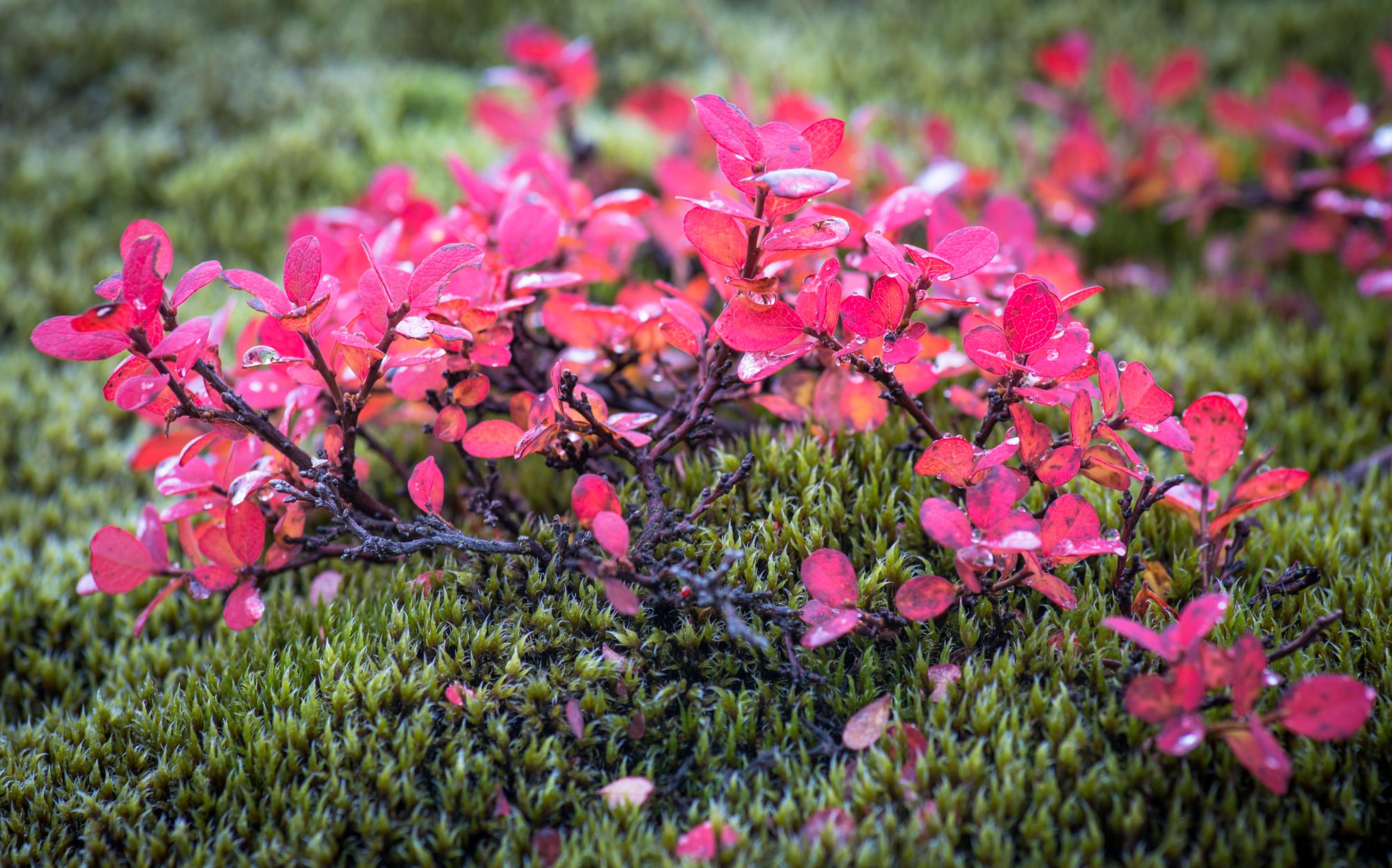
dwarf birch
The only native mammal on the island is the arctic fox! There are sheep everywhere and much of the meat served here is lamb, very little beef or chicken. There is plentiful and delicious fish and the bread is wonderful. We passed a geothermal area where much of the local produce is grown in greenhouses. I suspect that the recent rush in the tourist trade is taxing their resources and wonder if they are now importing more food. Something to look into.
We were able to spend a couple of hours here with minimal drizzle taking photographs.
After leaving Thingvillir we had rainy weather the rest of the day. We stopped for lunch at the cafeteria there at the national park and then made our way on to Vik (about 110 miles). It rained heavily the whole distance and we were all feeling a bit skeptical about the next day’s forecast. We had a nice dinner at Hotel Katla where we stayed for the night. Early morning departure for Jokulsarlon (prounounced ˈjœːkʏlsˌaurˌloun̥) Glacier Lagoon about 118 miles.
 Traveling Beyond the Postcard